




By Eric Forga -
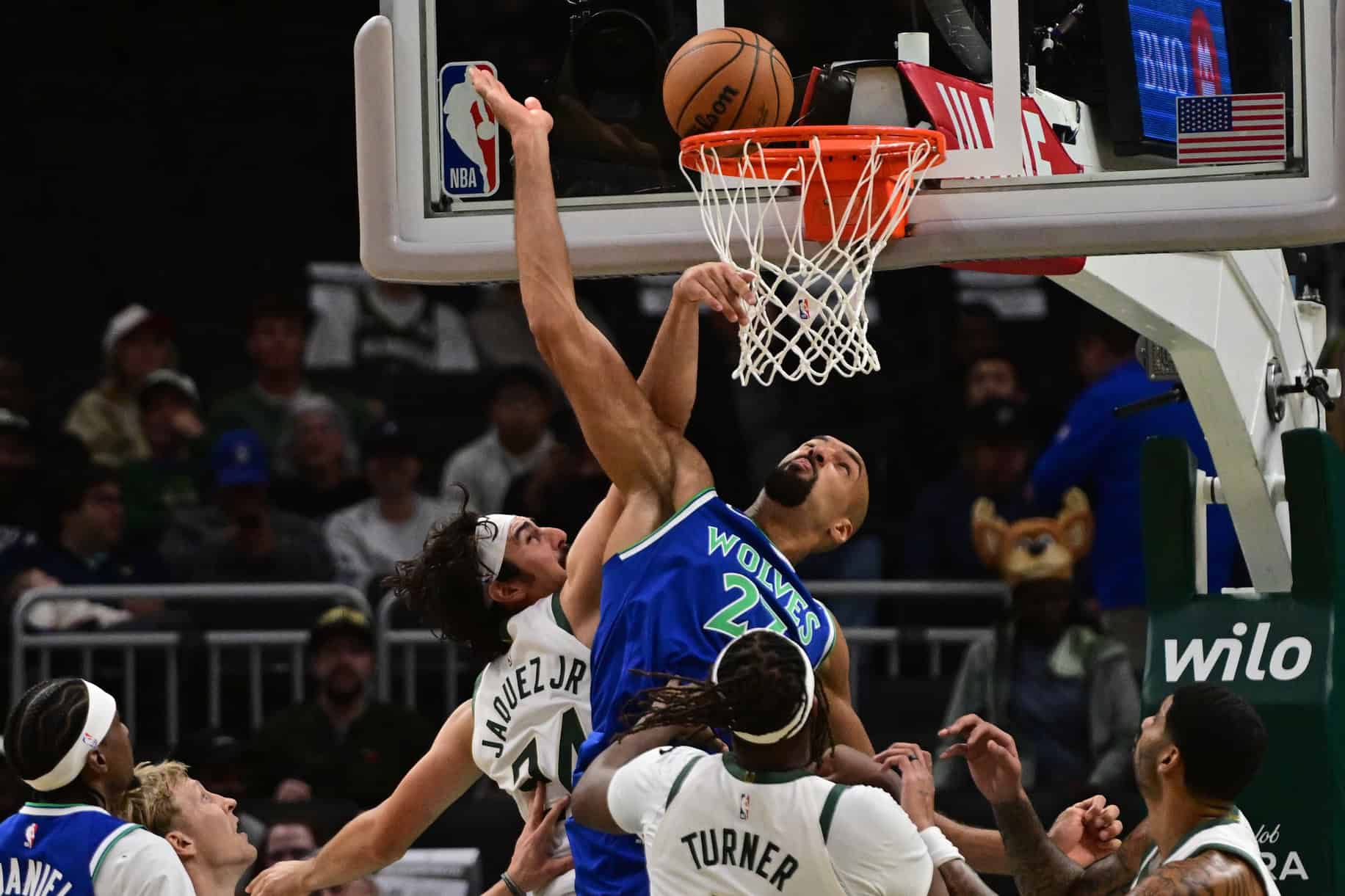
The Minnesota Timberwolves opened their preseason with a 116-97 win over the Milwaukee Bucks, giving fans plenty to get excited about. The offense played at pace, the new-look lineup showed promise, and Minnesota looked comfortable getting out in transition. But beneath the highlights was a warning you can’t ignore: Rudy Gobert cannot be responsible for cleaning up everybody else’s work on the glass.
If the Timberwolves want their faster offensive identity to translate into winning basketball, rebounding must become a collective responsibility. It can’t become something reserved for the tallest player on the floor. All five players need to finish defensive possessions.
Milwaukee grabbed nine offensive rebounds in the first half and turned those extra opportunities into 15 second-chance points. Even more concerning, five of those offensive rebounds came during two minutes in the first quarter with Gobert on the bench. Those numbers reveal more about an issue Minnesota must address than the final score does.
Winning comfortably doesn’t erase possessions where the defense forces a miss, only to give the opponent another chance. Against better competition, those mistakes can turn a strong defensive performance into a frustrating loss. Anthony Edwards recognized the issue afterward.
“We got to box out instead of trying to out-jump people,” Edwards said. “We try to out-jump people, and we kind of limited in size.”
That’s the right diagnosis. Athleticism is useful, but it cannot replace putting a body on somebody. Minnesota cannot treat every missed shot like a jumping contest and expect its talent to solve the problem.
Gobert can anchor the paint, challenge shots, and provide the foundation for Minnesota’s rebounding. But asking him to contest a driving scorer and then recover to beat an untouched opponent to the rebound is asking him to solve two problems at once. His teammates need to handle the first contact. Find an opponent, establish position, and pursue the ball.
Even when a teammate ultimately collects the rebound, the player who prevents an offensive rebounder from reaching it has done valuable work. Jonathan Kuminga understood that responsibility after finishing with two rebounds in 14 minutes.
“We all gotta go watch film, work on it and practice it so we can be a good rebounding team and not just leave Rudy by himself on the boards,” Kuminga said. “We all, collectively, have to go get it.”
That message must extend to Edwards, Jaden McDaniels and the guards. Chris Finch has already emphasized gang rebounding, particularly the need for guards to help their frontcourt teammates. It cannot remain just a talking point.
The encouraging part of the opener was Minnesota’s willingness to run. The Wolves generated 15 first-half fast-break points, using defensive rebounds and turnovers to create easier scoring opportunities. But running starts with securing possession. Leaking out early means little if Milwaukee, or anybody else, still has the basketball.
Joan Beringer offered encouragement with 12 points, seven rebounds and a block in 15 minutes. Still, the answer isn’t simply to ask another center to carry the same burden when Gobert rests.
The opener was a promising introduction, not a finished product. Minnesota has the athleticism to play exciting basketball. Now it needs the discipline to do the less glamorous work that makes those highlights possible. Gobert should lead the rebounding effort. He should never have to be the team’s entire effort.
Think you could write a story like this? Hockey Wilderness wants you to develop your voice, find an audience, and we'll pay you to do it. Just fill out this form.

Recommended Comments
There are no comments to display.