




By Eric Forga -
The Minnesota Timberwolves didn’t draft Isaiah Evans expecting him to earn rotation minutes immediately. They drafted him because his shooting, size, and off-ball movement give him a chance to become the complementary wing every contender needs around Anthony Edwards.
Isaiah Evans enters Minnesota as a rookie with a crowded path to major minutes, but he also arrives at a time when the Wolves need perimeter scoring and depth. Donte DiVincenzo’s Achilles injury creates a temporary opening in the backcourt and on the wing. Therefore, Evans could earn a meaningful role sooner than many second-round picks typically do.
At 6’6”, Evans has the frame of a wing but much of the offensive skill set of a shooting guard. That matters for Minnesota because the Wolves don’t need another ball-dominant player. They need players who can make defenses pay when Edwards, LaMelo Ball, or another creator bends the floor.
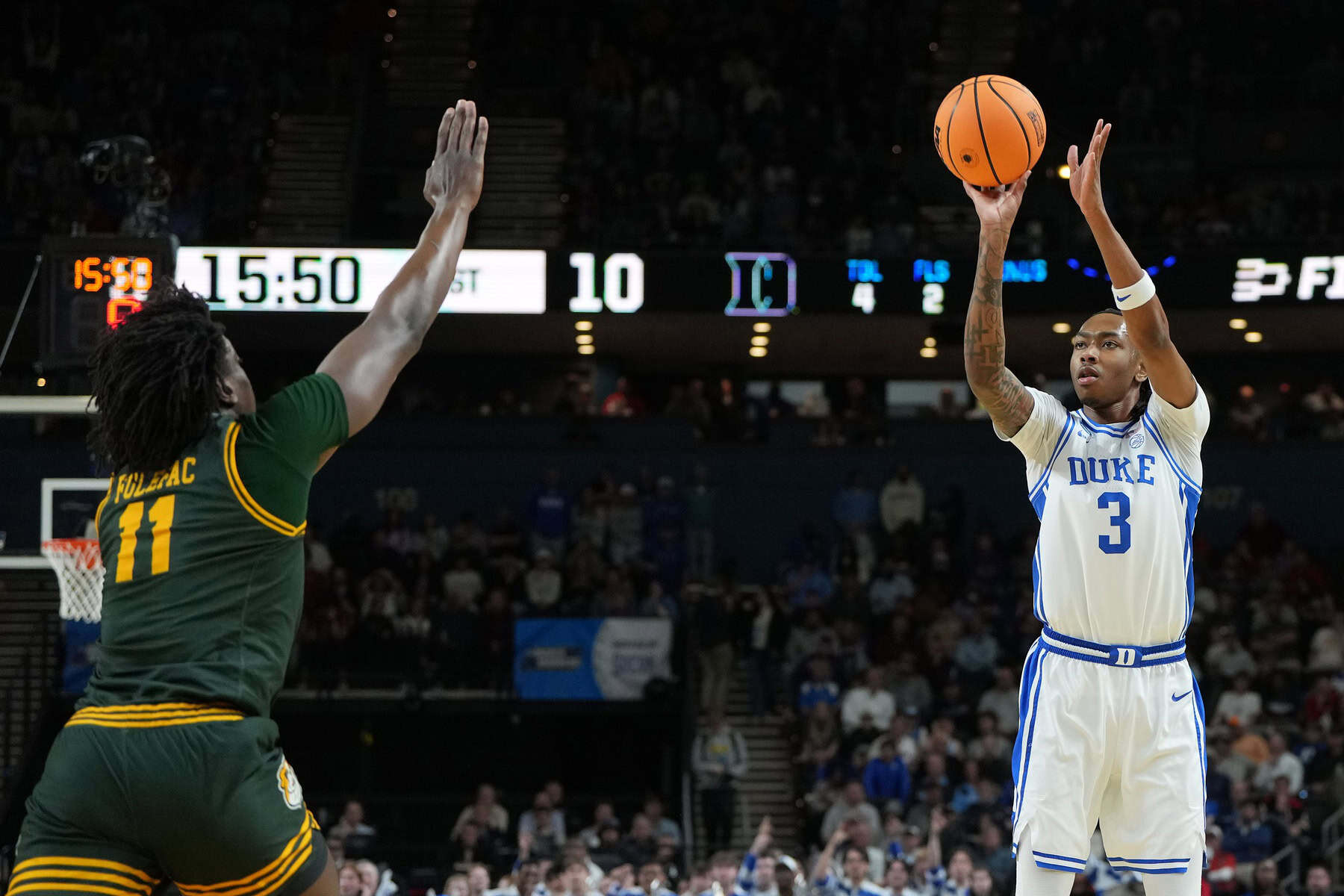
Evans’ biggest NBA-ready skill is his shooting. He averaged 15.0 points per game during his sophomore season at Duke and made 2.7 three-pointers per game. Although he shot 36 percent from deep in that larger offensive role, he hit 41 percent as a freshman and has a reputation as a high-level shot-maker with deep range.
https://twitter.com/Huncho_Jman/status/2070572509884281055?s=20
More importantly, he’s not only a stationary corner shooter. Evans can sprint off flare screens, relocate when a teammate drives, rise quickly on catch-and-shoot opportunities, and make difficult jumpers over contests. Duke frequently used his movement to free him for perimeter looks, which is a natural fit beside Minnesota’s ball-dominant stars.
That’s the key to Evans’ early value: He should make life easier for Minnesota’s better players. If Edwards draws two defenders on a drive, Evans has to be ready in the corner. If Ball pushes in transition, Evans must fill the wing for an early three. Suppose Minnesota runs a halfcourt action through Rudy Gobert or Kuminga. Evans can cut, lift from the corner, or curl around a screen to create instant spacing. He doesn’t need 15 shots per night to help. He needs to knock down the six or seven clean opportunities that a talented offense can create.
Isaiah Evans should begin the season as a second-unit wing, likely competing for minutes at shooting guard and small forward. The most realistic early role is as an 8th-to-10th man who enters games to provide shooting, pace, and lineup flexibility.
Minnesota’s projected starting five features LaMelo Ball, Anthony Edwards, Jonathan Kuminga, Jaden McDaniels, and Rudy Gobert. In that group, Evans is not likely to start unless injuries or a major training-camp surprise changes the equation. His path to minutes should come in bench-heavy groups, particularly alongside creators who can generate advantages for him.
The most logical expectation isn’t that Evans becomes a primary scorer immediately. It’s that he fills portions of the job DiVincenzo has provided in Minnesota: shooting without needing the ball, keeping defenses honest, competing defensively, and bringing energy to the second unit. Evans will not be expected to replicate DiVincenzo’s playmaking or experience immediately, but he can offer a younger version of the movement-shooting element.
Evans’ offensive fit is obvious. His defensive development will determine whether he becomes a situational shooter or a dependable playoff rotation player. He has useful tools: a 6’6” frame, a reported 6’9” wingspan, quickness, and the potential to guard across multiple perimeter positions.
https://twitter.com/WolvesClips/status/2077495496336142797?s=20
Evans has also identified defense as an area he wants to improve, specifically naming Jaden McDaniels as someone he wants to learn from. That’s a promising sign, because Minnesota has built its identity around length, effort, and defensive versatility. McDaniels, Gobert, Jaylen Clark, and Edwards give the Wolves the infrastructure to protect a young wing while demanding accountability.
Still, Evans will have to prove he can handle NBA physicality. He’s listed at 186 pounds, so stronger wings may try to dislodge him on drives, post-ups, and screens early in his career. If he gets caught on screens, loses focus away from the ball, or becomes a target in pick-and-roll, his minutes could disappear quickly on a team trying to contend.
The most realistic rookie year projection is 12 to 18 minutes per game, with a chance to push higher while DiVincenzo is unavailable. Evans should open as a rotation shooter, spend time learning both wing spots, and earn more responsibility if his defense becomes trustworthy.
His ceiling in Minnesota is much more exciting. If the jumper translates and he becomes a capable multi-position defender, Evans could grow into a valuable two-way wing who thrives next to Edwards for years. The Wolves don’t need him to be a star immediately. They need him to be a connector: a player who stretches the floor, punishes help defense, and gives Minnesota another young perimeter option with real upside.
For a No. 33 overall pick, that is a strong bet and potentially one of the more important value additions on Minnesota’s roster.
Think you could write a story like this? Hockey Wilderness wants you to develop your voice, find an audience, and we'll pay you to do it. Just fill out this form.

Recommended Comments
There are no comments to display.