



By Jonah Maves -
The Minnesota Timberwolves looked like they would have a thin frontcourt after trading Naz Reid to Charlotte and Julius Randle to Brooklyn. Second-year center Joan Beringer was expected to step into a rotation role, but the team still needed a third big to survive the regular season.
By this point of the off-season, Minnesota's cap sheet was nearing the second cap apron. They hadn't shed Josh Green's salary, which eventually led them to sign Jonathan Kuminga, and they needed another rotation bet.
The issue was that their options were limited to minimum contracts. If they were going to find someone, it would need to be a savvy move along the margins.
The veteran players on the open market were limited. Among the free agents available for minimum contracts were Larry Nance Jr., Tony Bradley, Nick Richards, and Dwight Powell.
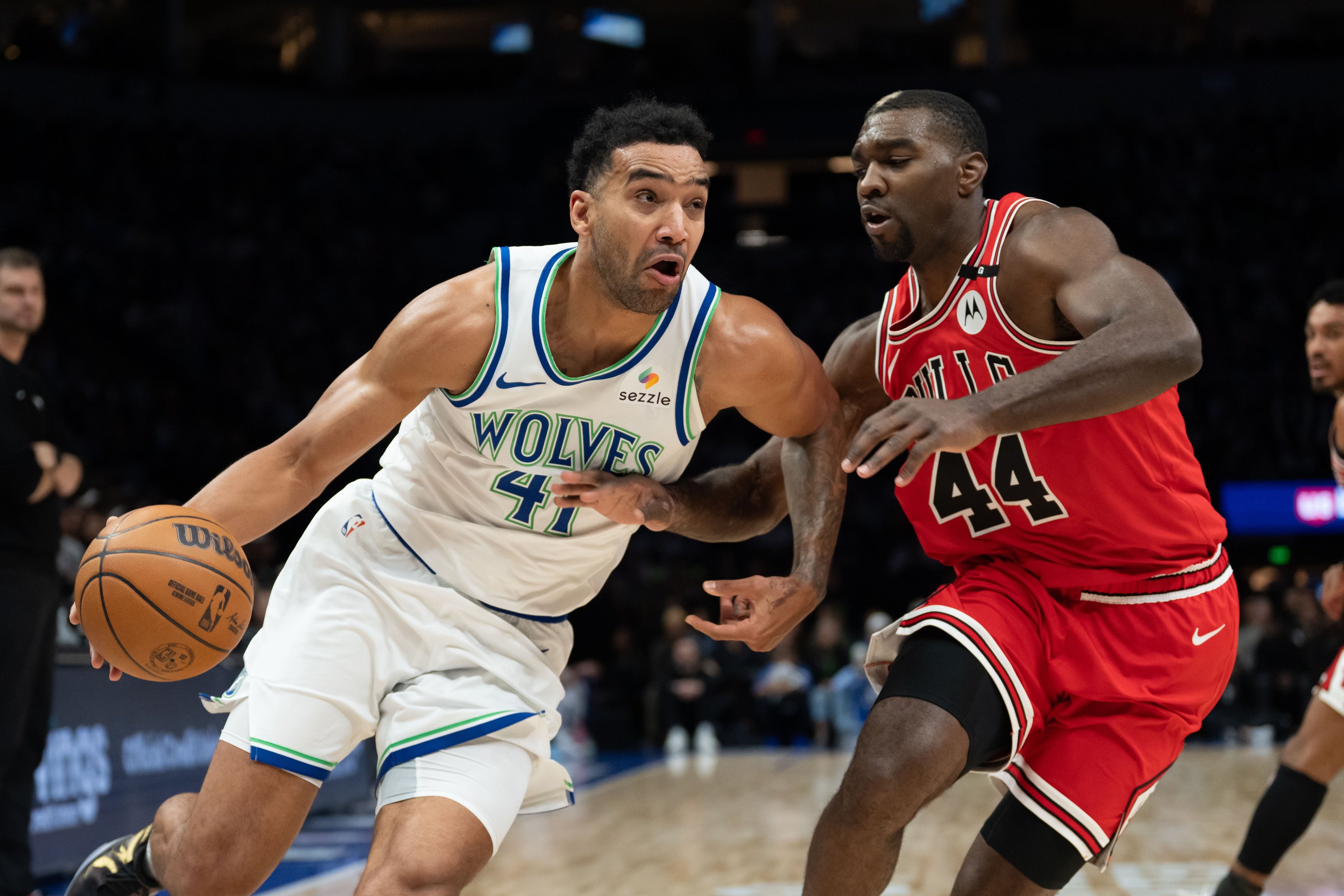
However, Tim Connelly had an ace up his sleeve. He looked to Europe to fill the void, signing veteran PF/C Trey Lyles after a season with Real Madrid.
Tim Connelly signing former players tied to his Denver Nuggets tenure is nothing new.
- Connelly signed veteran options Austin Rivers and Bryn Forbes in the 2022-23 season.
- Connelly traded for Monte Morris at the 2023-24 trade deadline.
- Connelly brought in PJ Dozier on a partially guaranteed contract in the 2023-24 season.
- Bones Hyland was signed to a two-way deal after the Atlanta Hawks released him shortly after the 2024-25 trade deadline. Hyland eventually earned a standard contract and has become a staple in the back end of the rotation.
Lyles, 31, has had a loaded basketball career for a bench player.
He was a five-star prospect out of high school and played on the historic 2014-15 Kentucky Wildcats team that featured Karl-Anthony Towns and Devin Booker. Lyles was also involved in a 2017 draft-day trade that sent Donovan Mitchell to Utah and Lyles to Denver.
For the Wolves this season, Lyles has brought an important dynamic to their bench units.
Lyles has always had success as a hybrid tweener. He doesn't have a defined position as a power forward or a center, but Lyles can play both in the right context. He hasn’t completely replaced Naz Reid’s offensive dynamic, but he has found a way to fill the void as best he can.
Similar to Reid, some of it has been the tweener nature of Lyles’ playstyle. The strategy has been incorporated into how Chris Finch has used Lyles.
Naz Reid was one of Chris Finch’s favorite after-timeout (ATO) targets. Naturally, a big who can dribble, pass, and shoot is a matchup nightmare on drawn-up sets. Lyles doesn't have Reid’s on-ball talents, but Finch has tweaked his actions to make Lyles a target with his three-point shooting.
Lyles’ signature ATO set has been the Zoom Flare.
The “Zoom” action targets a player out of the corner. Zoom, also called Chicago, is a pindown screen into a dribble handoff. Lyles has operated as the handoff hub here. After Lyles gives a handoff to his corner teammate coming off a pindown screen, he flares out to the corner.
What makes this set successful is that it adds misdirection. The defense will shift toward the Zoom action. Therefore, the flare out can create an advantage. For a defense to defend this action, a lot of spoken and unspoken communication is required in a short time.
If the defense guards Lyles' flare out well, his teammate setting the flare screen can be available on the roll, or Lyles can attack the closeout and get downhill toward the rim.
Another signature set ATO that involves Lyles is their Pistol Horns Flare.
The “Pistol” action starts with a pass to the wing at the left angle of the perimeter and a big at the top of the arc. The initiator flows into a flare out from the top-of-the-arc big. Meanwhile, Lyles, at the elbow, aligns with the other big to form the Horns alignment.
The initiator flows into the horns screens to Lyles' side. Lyles then flares out off of the opposite bit, into the void on the left side of the perimeter.
Horns Flare is not a new set for the Timberwolves. They ran it frequently with Karl-Anthony Towns and Rudy Gobert, as well as with the Naz Reid-Gobert duo.
The window dressing of the Pistol look is what has made this ATO effective. Similar to the Zoom Flare, the defense is forced to communicate switches quickly.
It's been impressive to see Chris Finch retool his ATO sets to start the season, especially when you factor in that Naz Reid and the injured Donte DiVincenzo were Finch’s favorite ATO targets last season. Lyles isn’t the same player as Naz Reid, but he's found a way to be just as effective on these dead-ball, ATO possessions.
Think you could write a story like this? Hockey Wilderness wants you to develop your voice, find an audience, and we'll pay you to do it. Just fill out this form.


Recommended Comments
There are no comments to display.