


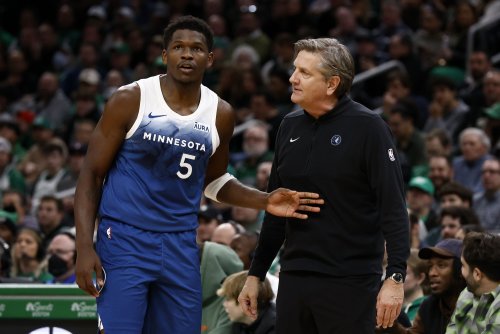
The Minnesota Timberwolves are 2-4 in the new year and tied with the Oklahoma City Thunder for the Western Conference’s No. 1 seed. The Wolves have continued to play above .500 competition, and Minnesota's opponents are exposing its weaknesses. Anthony Edwards is averaging 28 points, 5.0 rebounds, and 4.0 assists per game in this six-game stretch. He had a 48% field-goal percentage during that stretch, which is good considering his shot volume. But Edwards’ individual success hasn’t correlated to winning basketball.
Chris Finch has been adamant about the need for Edwards to be aggressive. However, that doesn’t necessarily mean he wants Edwards to hunt shots.
“I think it starts by defining that aggressive doesn’t mean shoot,” Finch said before the Orlando Magic game. “Anthony’s actual efficiency and impact is trending in the right direction. Now he just has to be able to mix in more playmaking when the avenues to get there aren’t there.”
Finch followed this up by saying he’s pleased with Edwards’ shot selection lately, but he wants to re-emphasize the need for him to get his teammates involved. Edwards is a special talent with superstar potential. It’d be a disservice to him if he didn’t have the freedom in the offense to make the plays that make him unique, as other star players do.
The key for him is not to lose sight of making the right plays at the right time in the game. His offensive ability is special and fun to watch for fans around the world. But the Timberwolves must find a balance to take things to the next level. They need to allow Edwards to be himself while ensuring he puts his teammates in positions to succeed.
Edwards failed to find that balance in Wednesday night’s
The Wolves were at their best in this and many games this season when there was regular ball movement in their offensive possessions. It’s become a simple formula: When everyone touches the ball, good things seem to happen for them. Put differently, they win when every player in the rotation makes positive contributions. But again, the late-game execution was a problem, just as it was in the
It’s paramount that the Wolves not only realize what’s holding them back but also put forth collective performances to show they can overcome it. If the Wolves return to relying on individual brilliance rather than team basketball, they will spoil their hot start to the season, and “maturity” will remain a talking point for the organization. In their 2-4 stretch, the Wolves have shown they can play the right way for long periods.
Edwards struggled with foul trouble in Tuesday’s
Ball movement has also affected how the Timberwolves approach possessions. Minnesota’s results indicate that everyone seems to be motivated when they’re involved on the offensive end. Just look at Jordan McLaughlin, Nickeil Alexander-Walker, and Kyle Anderson’s contributions in the Celtics game. Consider how Jaden McDaniels bounced back in the Magic game after an underwhelming performance against the Mavericks. When guys are involved in the offense, it often leads to solid defensive outings.
That was the case in the Celtics game. The Wolves didn’t have Rudy Gobert and Mike Conley, two essential contributors to their league-leading defense. Players can let their lack of involvement affect them. That can lead to inefficient offensive possessions, which ultimately affects Minnesota’s intensity on the defensive end. That seemed to be the case for the Wolves in overtime on Wednesday night. One of Edwards’ turnovers resulted in Jayson Tatum’s wide-open three, which put the game out of reach for the Wolves.
Isolation basketball is easier to guard and rarely contributes to winning basketball. That becomes especially noticeable in a playoff series where teams focus on Edwards and Towns’ tendency to assert themselves. For the sake of the team’s success, Edwards should become more selective with his isolation opportunities in certain moments of a game. It’s great for a momentum boost, but it’s not something the Wolves should rely on too often.
So, while Edwards’ stats indicate that he’s started to expand his game this year, his habit of shot-hunting is still prevalent, regardless of the defensive coverage he faces. With time, Edwards should be able to grow in this aspect. It’s all part of Minnesota’s maturation process.
Think you could write a story like this? Hockey Wilderness wants you to develop your voice, find an audience, and we'll pay you to do it. Just fill out this form.
Recommended Comments
There are no comments to display.