


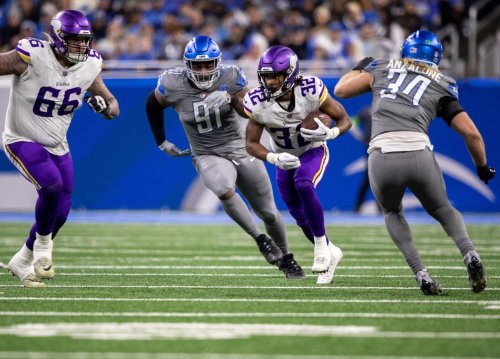
The NFL has been trying to resolve the tension between the entertainment value and the inherent danger of kickoffs for years. Last year, they allowed fair catches to be spotted at the 25-yard line regardless of where the returner fielded them. That didn’t yield the desired results, so the NFL’s Competition Committee voted to adopt the XFL’s kickoff rules for one year.
Teams will still kick off from the 35-yard line, but all the kicking team’s players will line up with one foot on the receiving team’s 40-yard line. The 10 players on the kicking team cannot move until the ball hits the ground, a player in the landing zone or the end zone. The landing zone is between the receiving team’s goal line and the 20-yard line.
On the other side of the field, nine players on the receiving team must set up in the five-yard area between the 30- and 35-yard line. At least seven of those players must have a foot on the 35-yard line, and all players in the setup zone cannot move until the kick has hit the ground. A maximum of two returners may line up in the landing zone and can move at any time during or before the kick.
The league is trying to encourage kickoff returns while reducing the space between players to prevent injuries. Here is the complete set of rules, including a video explainer. But most players will be huddled around the landing zone, and most teams will return kickoffs frequently. Still, they must practice the new rules and think through strategies because different personnel may thrive with the new rules.
“The biggest thing is…now you're really able to get a lot more reps because you've essentially eliminated 25 yards of running. So that really helps out big time,” said Minnesota Vikings special teams coordinator Matt Daniels. “We're all new to this, and it's the teaching phase of it.
“You have to be very specific and focus on one phase at a time because it's so many different nuances that are into the rule from a kickoff standpoint, formation standpoint, from a kickoff return standpoint…. You kind of have to have a day where we're solely focusing on kickoff and a day where we're solely focusing on kickoff return, just because there are so many nuances that are built into the new rule.”
Daniels loves the new rule because it’s a challenge for the staff. “No one has done it,” he said. “You really got to put your coaching hat on.” One of the biggest challenges will be deciding who to deploy to special teams. The Vikings have multiple options to return kicks, and Daniels said the landing zone formation will require a different skill set than the traditional kickoff.
Daniels highlighted that the value of the returner increases throughout the league because there will be two returners on the field, and there should be more returns. Ideally, the new formation allows for more returns and play that resembles typical football. Still, as excited as he is about the new rules, Daniels says he’s a little wary.
Daniels is looking at XFL tape to understand who to deploy and how to maximize each return. Even with the unknowns and potential risks, he’s excited for the change. In 2010, teams returned kicked at an 80% rate. It’s been closer to 20% in the last couple of years. Daniels wants to see returns, and he wants his players to stay healthy. Like many fans of the game, he’s hopeful that the NFL has found a solution.
Think you could write a story like this? Hockey Wilderness wants you to develop your voice, find an audience, and we'll pay you to do it. Just fill out this form.
Recommended Comments
There are no comments to display.