


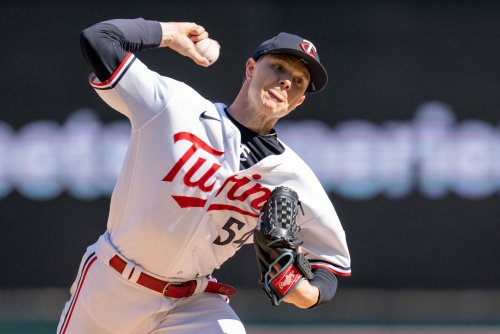
Sonny Gray looked the part of an ace in the Minnesota Twins' home opener on Friday. He struck out 13 Houston Astros batters, holding the defending champs to one run on four hits in the seven innings he pitched. Gray, 33, isn’t an ace in the traditional sense. He’s not Max Scherzer or Justin Verlander. But he’s leading a Twins pitching staff that is deep enough that they could stick Bailey Ober in St. Paul to start the season.
The Twins own the league’s lowest team ERA. Their pitching staff, not their Carlos Correa and Byron Buxton-led lineup, has carried them early in the season. Correa ($200 million) and Buxton ($100 million) have Minnesota’s biggest contracts. Gray ($30 million) is their most expensive pitcher, but Tyler Mahle ($7.5 million), Pablo López ($5.45 million), and Joe Ryan ($730,250) are on team-friendly deals. Kenta Maeda is on an eight-year, $25 million contract. But given its unique nature, which is highly incentive-based, he’s only making $3.125 million base this season.
Can the Twins continue to pitch like this throughout the year? It’s hard to say. But Gray, an 11-year veteran, says it has the makeup of a good rotation because of its depth.
Almost any team would take a Scherzer or Verlander. All of them want a young ace on a rookie contract. The Twins haven’t developed an ace under the Derek Falvey-Thad Levine regime. But they traded for Ryan, who pitched well against Minnesota’s AL Central opponents last year. And they have filled out a deep staff that will allow Ober and Louie Varland to develop in St. Paul. Eventually, they will need to establish a pitching pipeline to keep the rotation full, especially as injuries inevitably take their toll on starters. However, Falvey’s Cleveland Guardians teams often relied on trades to fill out the rotation, and it has worked at the beginning of the season.
Rocco Baldelli acknowledges that things can change throughout the season. But he appears committed to pitching players deeper into the game, and he’s seen other staffs jump-start each other in the past.
The upside to a rotation geared around depth rather than an ace is that it should be better able to sustain injuries. It won’t collapse if the ace gets hurt. Two of Minnesota’s pitchers could go down, and Ober and Varland could step in for them. The depth may improve throughout the year, too. Simeon Woods Richardson or Jordan Balazovic could be major-league-ready at some point this season. But they don’t have a stopper if the rotation is slumping. There is no defibrillator. They’ll need to rely on the black and red claspers to awaken the next guy.
The Twins will need to keep pitching like this to win the Central and compete in the AL. They have some firepower in the lineup, but pitching was their Achilles heel last year. Few of their starters could go deep into the ballgame, which taxed the bullpen. For example, it would have been hard for Dylan Bundy or Chris Archer to jump-start the rotation last year. An analytical approach that didn’t allow them to pitch late in the game carred them throughout the season. But Mahle and López should be just as capable of boosting the rotation as Gray or Ryan. It’s a unique formula, one that the lack of a traditional ace necessitates. But it could work if enough of the pitchers stay healthy.
Think you could write a story like this? Hockey Wilderness wants you to develop your voice, find an audience, and we'll pay you to do it. Just fill out this form.
Recommended Comments
There are no comments to display.