


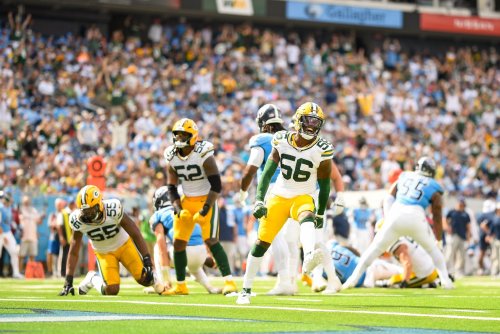
The Green Bay Packers' pass rush has been inconsistent to start the season. In their Week 1 loss to the Philadelphia Eagles in Brazil, they pressured Jalen Hurts 19 times. However, in their win the following week against the Indianapolis Colts, they managed only 11 pressures on Anthony Richardson.
In their Week 3 win over the Tennessee Titans, Green Bay’s pass rush recorded 20 pressures and eight sacks on Will Levis, their highest sack total in over 15 years. However, Jeff Hafley’s defense tallied just 14 pressures and two sacks in last Sunday’s loss to the Minnesota Vikings.
On Monday, Matt LaFleur revealed that Green Bay’s edge rushers have been "sacrificed" in some plays to contain and eliminate rushing lanes. However, this strategy has been ineffective. Pro Football Focus ranks Green Bay's run defense as the 10th worst in the NFL.
Devonte Wyatt has started his third year strong. He and Kenny Clark lead the Packers in total pressures with nine. Wyatt also leads the team in sacks and holds the best pass-rush grade among Green Bay’s defensive linemen in true pass sets.
On the other hand, Kenny Clark and Rashan Gary are off to disappointing starts this year. Gary has two games with zero pressures, totaling only six in September. Nick Bosa had seven alone against the New England Patriots in Week 4. Clark is off to the worst start of his career in overall defensive and pass-rush grades.
As the Packers look to improve their pass rush efficiency, a growing trend among defensive coaches could revitalize their front seven: simulated pressures.
A simulated pressure involves rushing non-traditional defenders while dropping traditional rushers into coverage, creating the illusion of a blitz while sending only four rushers.
Brian Flores used this tactic effectively against the Packers, keeping their offense in check during the first half. Jordan Love’s first interception came when the Vikings disguised a blitz in both the A and B gaps. Kamu Grugier-Hill made a crucial play by keeping his eyes on Love and covering the seam.
Similarly, the Buffalo Bills had scored at least 31 points in their first three games, but they had no answers for the Baltimore Ravens’ defense. Josh Allen and the offense frequently struggled to identify where the pressure was coming from. Allen completed just five of 12 passes under pressure. When not blitzed, he posted an 11.1% turnover-worthy play rate, the highest he's had in any game this year.
In Week 4, the Denver Broncos held the New York Jets to nine points. Vance Joseph effectively disguised his defensive looks, limiting Aaron Rodgers to 5.4 yards per attempt. The New York Jets' pass protection allowed the Denver Broncos to sack Aaron Rodgers five times. They also had no answers for the blitz.
In one notable play, the Broncos showed double A-gap pressure with a safety threat to blitz from the edge. One linebacker drops into coverage, and the safety comes off the edge. Breece Hall doesn't realize it until it’s too late.
It's challenging for offensive linemen to predict who is rushing and where the pressure will come during a simulated blitz. Additionally, using simulated pressures forces offenses to respect the threat of second- or third-level pressure, even if it doesn't materialize. By design, simulated pressures compel offenses to adjust their protection schemes.
The Packers possess the personnel and versatility to deploy their linebackers and safeties in simulated pressure packages. While this strategy may not solve all their problems, it forces offenses to prepare for an element of the game that the Packers might not showcase frequently on tape.
Think you could write a story like this? Hockey Wilderness wants you to develop your voice, find an audience, and we'll pay you to do it. Just fill out this form.
Recommended Comments
There are no comments to display.