

Jordan Love and the Green Bay Packers took down the playoff-hopeful Seattle Seahawks on a primetime stage that felt like a home game environment thanks to the cacophony of cheering Packers fans in attendance.
It was a victory this Packers team needed — a statement win over a successful team in front of millions of eyes. After losing to the top NFC teams, this win proved they could hang with winning teams and come out on top.
But while the 30-13 final score looked decisive, the game looked rocky for much of the second half. Matchups against Seattle always end up weird. While victory looked inevitable, the Packers couldn't land the decisive blow and put the game out of reach for the Seahawks.
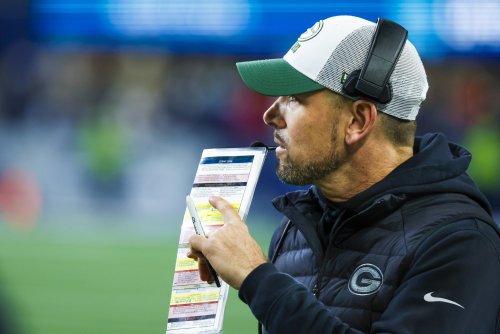
Part of that was due to some uncharacteristically conservative decision-making from Matt LaFleur. Shaky clock management at the end of the first half and taking a field goal instead of going for it on a short fourth down led to them leaving points off the board.
It wasn't just a quirk of this week, either. LaFleur has been loathe to get aggressive on fourth down, and the play design hasn't been ideal when he has gone for it.
The Packers are 10-4, so this might be a nitpick. But LaFleur's approach has certainly changed this season. Could it be a problem down the road?
LaFleur was among the most aggressive head coaches in his first few seasons. He wasn't a pure madman like Dan Campbell when it came to going for it on fourth down. When analytics suggested it was the right call, LaFleur was unphased by making the bold decision.
Of course, LaFleur famously didn't go for it in the 2020 NFC Championship game, which perhaps led to him taking the risk more frequently in later seasons.
But in 2024, LaFleur regressed to one of the most conservative coaches in the league. Before Sunday night's game, LaFleur went for it on just one out of nine opportunities on fourth down. More often, he's left the offense on the field just to bait an opposing penalty, usually burning a valuable timeout in the process.
Sunday saw three decision points, one to end the first half and two in the second half.
On the first, it wasn't a true fourth-down go-for-it-or-kick decision. Instead, it was a choice of how to use the remaining time. LaFleur mismanaged the clock despite his team having the chance to march down the field and score. By the time the team reached the goal line, there were four seconds left, and LaFleur took the points with an easy field goal.
LaFleur admitted this was a mismanagement, not wanting to allow Seattle to get the ball back.
"I totally mismanaged the end of the half," he said. "That was 100% me. Just being too indecisive. Putting it on Jordan. That is something that can't happen. That can cost us if it were a tighter game."
In his next opportunity, he also settled for three points, which allowed the Packers to go up by three scores. But the extra four points from a touchdown could have further sealed the game — and what Packers fan doesn't have flashbacks from Green Bay settling for field goals in Seattle?
Later, LaFleur finally went for it but opted for a bland shotgun run that went nowhere. The aggressiveness was nice and could have salted away the game, but the play call was questionable.
Thankfully, the Packers played complementary football and soundly beat the Seahawks. There was no need to regret any of these decisions. However, those missing points could have made the difference in a tighter game.
What led to this change in philosophy? Having your starting quarterback injured or playing with a backup quarterback could be a factor. The Packers also have an excellent punter, so they feel more confident when forced to kick the ball away. On the other hand, playing six games with the league's worst kicker could lead to the opposite approach.
Acme Packing Company's Tex Western broke down each opportunity this season and found multiple interesting factors.
The sample size is much smaller in 2024, where they've had much fewer opportunities where it would make sense to go for it.
Western's data suggests that it wasn't quarterback uncertainty leading to the passiveness, with only two decisions between Weeks 1-6.
Instead, the data suggests that history with the Detroit Lions might be a major factor. Six of these go situations occurred in games against the Lions, and LaFleur went for it just once. Campbell is an absolute madlad with his team's decisions, creating a stark contrast.
Previously, LaFleur was more aggressive against the Lions, but his low success rate may have altered his perception.
With so many of this season's go-for-it decisions being against the Lions, LaFleur might simply be letting that team's success cloud his judgment.
If the Packers face the Lions again in the postseason, this trend could be a massive pillar of victory. Campbell will continue to be aggressive, and while it could bite him in the kneecaps, he'll keep attacking. LaFleur may need to return to his old ways to keep up with an offense as powerful as Detroit's.
Other teams aren't quite as aggressive, but LaFleur should still consider being more trigger-happy. The Packers already boldly choose to receive the ball to start the game rather than defer like most teams, allowing them to get on the board quickly and establish the pace of the game. They'll need to dictate games in all areas if they want to succeed on the road in the playoffs.
I trust Matt LaFleur's judgment in most things. He's a terrific head coach. Despite being less aggressive, his team is still doing great things. But this team is probably going to the playoffs and needs to play clearer football if they hope to sniff the Super Bowl. Being more aggressive in go situations could be the difference between glory and defeat.
Think you could write a story like this? Hockey Wilderness wants you to develop your voice, find an audience, and we'll pay you to do it. Just fill out this form.
Recommended Comments
There are no comments to display.