

With no first-round pick in each of the next two drafts, the Green Bay Packers likely feel additional urgency to maximize the value of the assets they still control. That reality could prompt them to consider trading back. It’s something teams in their position — especially those typically drafting in the 20s — should always keep on the table.
The Packers have nine draft picks this April. However, roster turnover is looming. They are expected to release Elgton Jenkins, and Sean Rhyan and Romeo Doubs will hit the open market in a couple of weeks. On defense, Quay Walker is also positioned to test free agency.
According to Over The Cap, Green Bay has 66 players under contract for 2026. That’s a healthy number at this stage of the offseason, but it does not eliminate the possibility of significant change. However, they have just 29 players under contract for 2027 and hold only five draft selections in that class. That number should rise once compensatory picks are awarded — at minimum tied to departures such as Malik Willis and Rasheed Walker — but as it stands, the long-term outlook is thin.
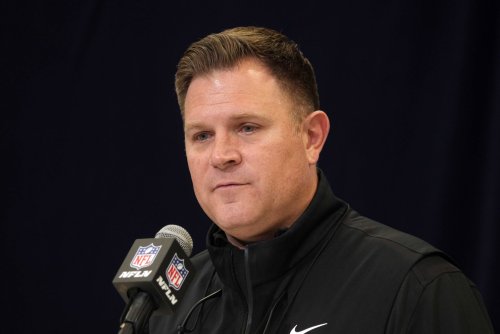
Still, I wouldn’t expect Brian Gutekunst to shape his draft strategy around what the 2027 pick inventory looks like today. Front offices operate in shorter competitive windows. The focus will — and should — remain on maximizing value in 2026.
The broader point is about process. The Packers don’t need another Anthony Belton situation like last year. That’s not a knock on Belton’s talent. But he was ranked 96th on the consensus board and was selected 54th overall. That type of reach compresses value, especially for a team that relies heavily on internal development and draft capital.
If the board does not align — if the talent available does not match the slot — then trading down has to be the move. Accumulating additional picks, staying aligned with consensus value, and maintaining flexibility should take priority over forcing a selection. For a team without first-round picks in the next two years, discipline on draft day becomes even more critical.
Some evaluations suggest this year’s draft class is particularly strong in areas where Green Bay is most likely to invest. Defensive line and cornerback stand out as deep groups, with legitimate mid-to-late round value at both spots. By contrast, I am not especially high on the offensive line class as a whole. There are individual prospects with upside, but the overall depth and value relative to the slot don’t appear as strong as what is available on the defensive front or at corner.
Assuming Green Bay stays at No. 52 and does not trade down, that is the direction I prefer Gutekunst to take. Lean into the board's strength. If the defensive line and cornerback offer better talent-to-value alignment in that range, that is where the pick should go, rather than reaching to fill an offensive line need.
It is simple math. The more players you select, the greater your odds of hitting on more than one impact contributor. Drafting is an exercise in probability, not certainty. Volume increases your margin for error.
When you factor in the strengths and weaknesses of this class — particularly the depth along the defensive line and at corner — the logic becomes even clearer for the Packers. If value clusters in the middle rounds, accumulating additional picks in that range only improves the odds of landing multiple contributors instead of banking on a single outcome.
Given Green Bay’s need to maximize long-term value, trading down is not just a theoretical option. It is a viable, disciplined strategy that aligns with both the board and the roster outlook.
Think you could write a story like this? Hockey Wilderness wants you to develop your voice, find an audience, and we'll pay you to do it. Just fill out this form.
Recommended Comments
There are no comments to display.